Traditional extraction processes for monk fruit mostly use dried fruits as raw materials, extracted with organic solvents or water, heated and concentrated under reduced pressure using steam jackets, followed by high-speed centrifugation to remove impurities, adsorption with macroporous adsorption resin, elution with organic solvents, further concentration under reduced pressure to make paste, and spray drying. Alternatively, fresh monk fruit is used as the raw material, and enzymatic extraction technology is employed to extract mogrosides from fresh monk fruit.
The traditional process for extracting mogrosides not only results in low yield and poor quality but also involves high energy consumption, significant solvent loss, cumbersome operations, and high labor costs, which are detrimental to the product's market competitiveness. To address these issues, Chongqing Jiahe Filtration Technology Co., Ltd. has introduced advanced membrane separation technology into the extraction of mogrosides. The process flow is as follows:
Extraction→Centrifugation→Membrane Clarification→Membrane Concentration→Resin Adsorption→Membrane Concentration→Spray Drying→Subsequent Processing
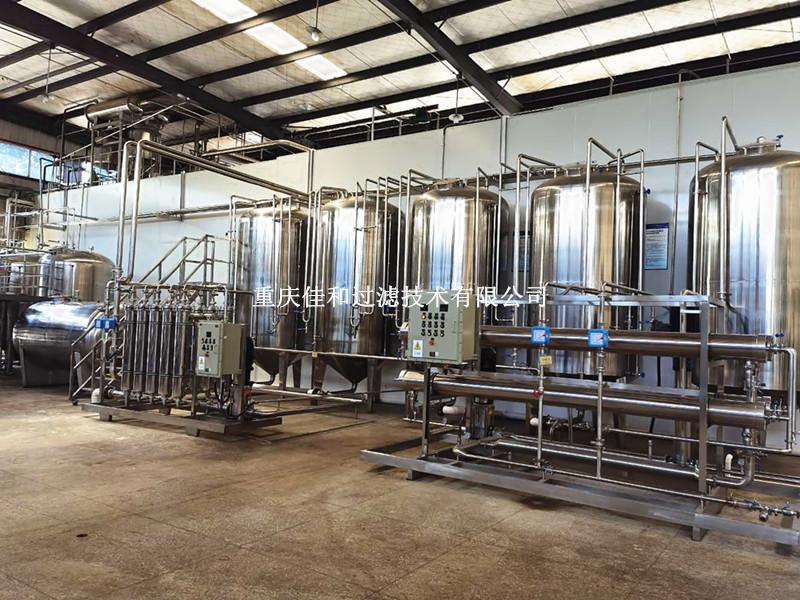
Advantages of Membrane Separation Process:
1.The obtained mogrosides are of high quality and high yield;
2.Energy saving: membrane concentration consumes only 15%-20% of the energy required for steam thermal concentration;
3.Less waste liquid generated, environmentally friendly, and high material utilization rate;
4.Resin adsorption after membrane concentration reduces resin processing time and eluent usage;
5.After elution, membrane concentration achieves a high solvent recovery rate, up to 70%-90%;
6.Spray drying after membrane concentration saves energy and achieves excellent spray drying results;
7.Imported high-resistance concentration membrane elements with long service life, high processing capacity, and cost-effectiveness;
8.Modular design of the membrane separation system, small equipment footprint, facilitating factory expansion, etc.



